


Stuck in Mazatlán
- Jun 8, 2022
- 7 min read
We left you last time as we had just hoisted our anchor to buddy boat back to Mazatlán with Frank and Patsy on Rogue. It is a little over 150 miles which under good conditions would take at least 30 hours. Instead of sailing through the night (remember that Frank and Patsy previously had an interrupted night when their stern anchor broke), we would try to “roadstead”. This is where you find a relatively shallow spot along an unprotected sandy shoreline to anchor overnight to sleep if the winds and seas are mild. As we sailed along the coast it seemed like it was going to work well since the winds were light and the seas were relatively flat. Unfortunately, none of us got much rest that night as it ended up being quite rocky and rolley all night. But on the bright side we did enjoy a wonderful sunset.


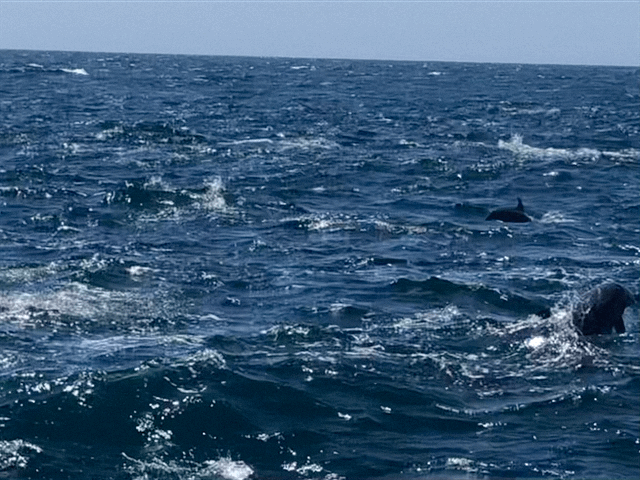
In the morning we decided to sail straight through to Mazatlán instead of anchoring in a second roadstead as originally planned since the night had been so uncomfortable. It was not a good day sailing. The seas were working against us slowing us considerably and making a very uncomfortable ride. Yep, even after this long on the boat I still get seasick when things get rough. 🤢🤮 And as the winds started picking up it was clear that we were not going to be able to make our point of sail. Our boat will not point very close to the wind (in this case out of the northwest and the direction we need to travel) We ended up sailing towards land as long as we could then tacking out to sea on a more southerly course before tacking back towards land to make some headway towards our destination and repeat (think 3 steps forward, 1 step back). Looks like this was going to be a long hard journey to Mazatlán! Early in the afternoon we were able to enjoy a pod of dolphins. They were hunting so no one came to our bow to play or say hello, but it was still nice to watch them swim by.





That was the last bit of joy we had before a long hard evening. As buddy boaters we were regularly chatting with Rogue on the VHF radio. Our VHF radio was receiving great, on the other hand was not transmitting at all (add that to the growing list of needed repairs/upgrades). This wasn’t as much as a problem at times because we could use our handheld VHF radio to transmit; however, its range is very short and would only work when our boats were sailing very close together. The first alarming transmission came when Frank reported his bilge was filling with water. Having your boat fill with water is never a good thing, but it isn’t in and of itself so alarming—as sailors, this happens. You find out where the water is coming in from and stop it, then find why the bilge pump isn’t working and start it. The alarming part is that after hand pumping over 100 gallons of water out of their bilge one five-gallon bucket at a time (exhausting), it immediately began to fill up again. We stood by the radio nervously hoping they were getting it figured out and wondering what we could do to help them. Worst case scenario we figured we could use our satellite GPS to send out a distress signal for them and take them on board our boat if they were in danger of sinking. Fortunately, they radioed to inform us that they got it figured out and under control. We had slowed down to stay close to them while they were having difficulties, but with their assurances that all was well, we continued on course—well, as close to “on course” as the wind and sea would allow.
Later, we noticed they had tacked back out to sea and were falling further behind us—too far away for us to be able to transmit to them. We would eventually have to do the same, so we just assumed that they tacked early. Until they radioed us to let us know that their engine had stopped. We were all motor-sailing to give some added forward speed against the rough seas. While it is never fun to have engine problems, again, this is not in itself a dangerous problem—they are sailboats after all. But if the winds die and you end up being thrown about while at the mercy of rough seas, you don’t want to be close to shore. We were thankful that even though we were not able to communicate to them, they continued to give us updates throughout the night that they had figured out their engine difficulties but had to wait for calmer seas to fix it, and that they were sailing along safely. It always seems that whenever things go wrong at sea it is never just one thing! And while it is not fun to go through something yourself, it is also miserable to stand by helplessly as someone else is going through it.
We made it to Mazatlán in the wee hours of the morning just as the sun was rising. We were exhausted and relieved to be near the end of this journey, when all of a sudden whoosh! A fog bank drifted on us out of nowhere, so thick we could barely see to the end of our bow. Weighing our options as to the best course of action, we decided not to enter the shipping channel into the harbor. Instead, we chose to go very slowly and follow our previous GPS tracks to where we had anchored at Stone Island just south of the harbor. After anchoring we went straight to bed. Frank and Patsy arrived safely shortly after us. It was still foggy when they anchored as evidenced by the picture they took of our boat at anchor.

When we woke up later that afternoon we motored into the harbor to anchor and Rogue was not far behind us. After being at anchor a couple of hours we hear a ship blowing its horn like it was in rush hour traffic. I made a joke to Jim that we were about to get run over by a ship, but when he looked out, it was a dredging ship that had been dredging in the ship channel blowing its horn at Rogue (who were anchored right behind us), as their panga was rushing over to tell them to move. No rest for the weary, when it rains it pours, and all that! They were well into the anchorage and not in the ship channel, but who’s going to argue with a vessel that is at least ten times bigger than you?


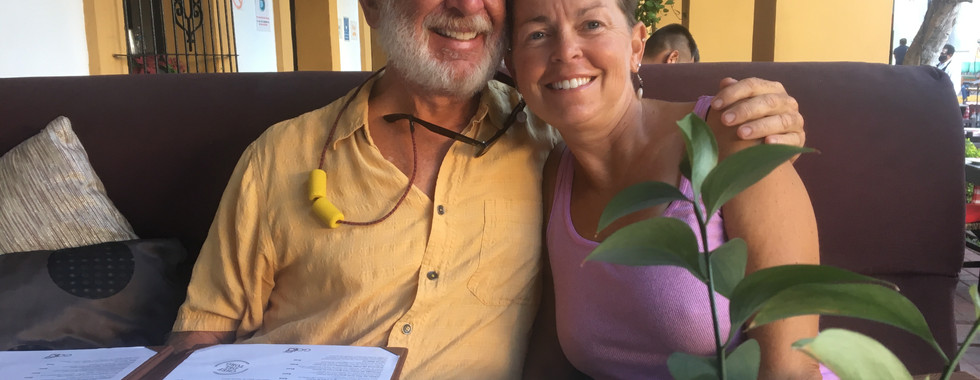
Before Frank and Patsy put away their boat for the season and headed back home, we were able to enjoy some time together over food and drink. We were even able to help Frank celebrate his birthday.








Our primary focus after getting back to Mazatlán was taking care of Jim’s lost passport issue. We scheduled our appointment with the consulate’s office, filled out and printed the necessary online passport application documents, and purchased passport photos. It all went very smoothly, and we were happy to find out that it would only take about 4 weeks to receive a new passport (or so they say…5 weeks and still waiting).
Our application traveled overnight via DHL Express from Mazatlán to the embassy in Hermosillo where applications are processed. After about 2 weeks you should be able to track the status of your passport application online at passportstatus.state.gov to see if it is “in process”. Five weeks in and the only message we get online is that a status update is not available. It is possible that the website only works for applications processed in the United States. With hurricane season upon us we would like to get out of Mazatlán (still in the zone), and get the boat back to Guaymas to be put away for the season so we can get home—not to mention that we are supposed to be out of Mexico when our tourist visas expire at the end of this month. Our main concern is that there is a problem with the application (would they contact us?) or that the application got lost. How long should we just wait patiently?
So, we sent an email to an address from the government website for information/help. We received a reply that referred us back to their website for information adding that we would not be receiving any further response—not helpful! You have to have an appointment to talk to someone at the consulate here in Mazatlán, but they won’t give an appointment to someone who has already submitted an application. We finally spoke to someone on the phone at the help center for the embassy who gave us an email address that went directly to where the applications are processed in Hermosillo. Our timely reply was that the passport should be arriving in a period of 4 weeks after they receive the application. (insert frustrated scream here) Did this person even read the email where I clearly stated that it had been over 4 weeks since the application reached them?! I must say that based on this experience, I certainly hope that we are never in need of emergency services or help for the US embassy or consulate’s office. So, plan B. If the passport is not here by the end of the week we are sailing north. When (if?) the passport arrives Jim will travel back by bus to retrieve it. And if we don’t make it out of Mexico before our tourist visa expires? Well, we will deal with that if and when it gets here. (deep breath).
UPDATE: As I'm preparing this blog to post we were notified by DHL that the passport had arrived. Yay! We set sail north in the next day or so.
As much as we love Mazatlán, we are ready to be out of here. It is one thing to be anchored in the old harbor here because you want to be. It is quite another to be stuck here when you don’t. But we have made the most of our time here exploring what there is to do and see—including some more off the beaten path things that we hope to be able to tell you about some time. We even took a ride inland to Durango, Mexico for a few days. But those stories are for another post as I have some work to do to get the boat ready to sail. In the meantime, here are some random shots around Mazatlán for you to enjoy.





Comments